
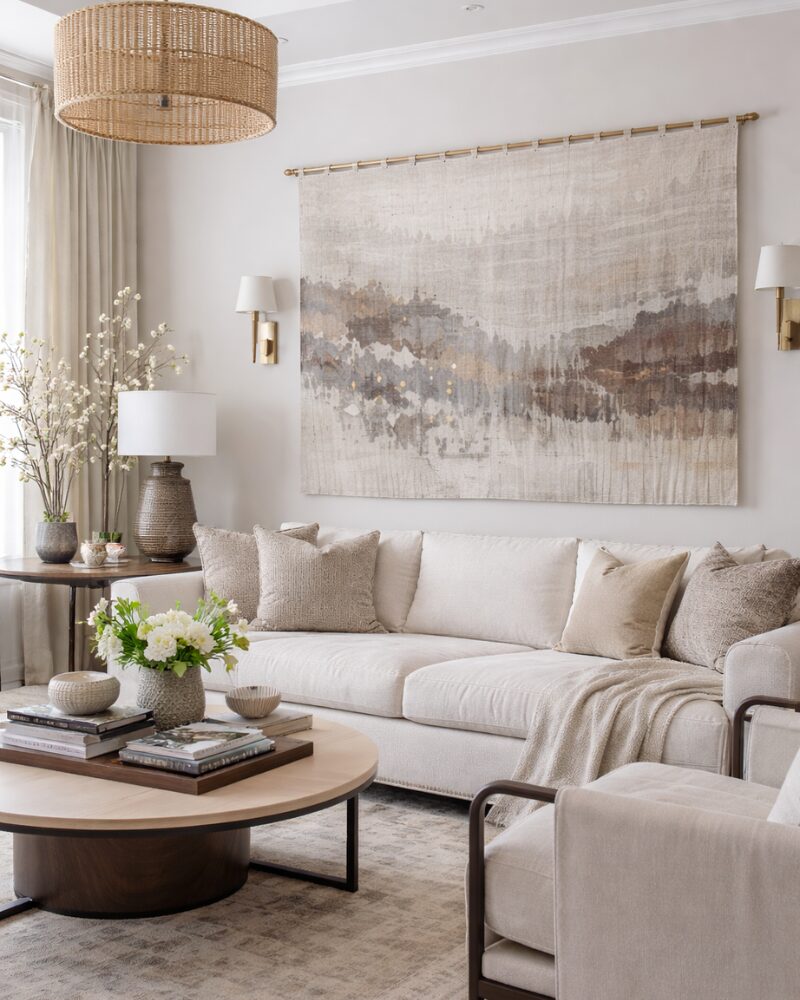
I really didn’t want to write a post on interior design trends for 2026. I’m not the biggest fan of design trends. But I also know it’s one of the most popular posts when I do share one, especially at the start of a new year.
Over the last 7–8 years of writing about trends every January, I’ve started to notice something else emerging. Not just trends in colours or materials but patterns in how people want their homes to feel and function. Meta trends, if you will.
And the truth is, most people I talk to aren’t actually looking for trends. They’re looking for reassurance. They want to know they’re making choices that will still feel good a few years from now, and not just right now.
I’m also not a big fan of adopting interior design trends wholesale in your home. Although, let’s be honest, you can’t always help it. Trends are everywhere. But when you look at them closely, they often tell a much bigger story about what’s happening beneath the surface.
So here’s what I’m going to share in this post. First, I’ll talk about a couple of those meta trends I keep seeing come up again and again. Then we’ll look at three things that feel “in” for 2026 and three things that feel “out”—not as rules, but as signals of where design is heading and why.
The Meta Trends I Keep Seeing
When I look back over the last several years of design trends, the biggest shifts haven’t actually been about finishes or styles. They’ve been about what we’re quietly asking our homes to do for us.
Meta Trend #1: We Want Our Homes to Support Us as Whole People
More and more, homes are being designed to support how we live in them day to day and not how they look when someone drops by for a couple of hours.
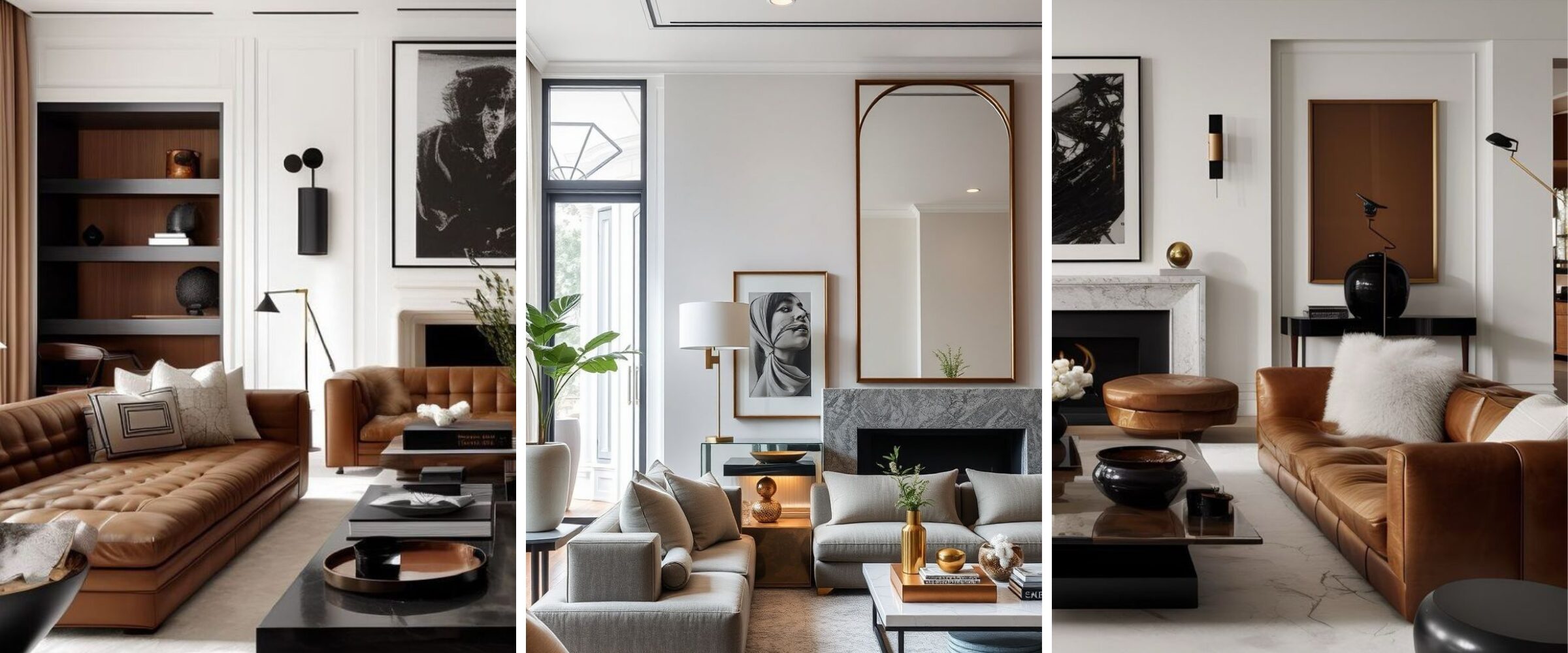
You can see this in so many of the choices people are gravitating toward lately. Warmer, moodier colour palettes instead of bright whites everywhere. Inspiration pulled from nature rather than high-contrast, high-shine finishes. Softer curves in furniture instead of sharp, rigid lines. Wood tones that feel warm and grounding, not overly polished or precious.
On the surface, these might look like aesthetic decisions. But underneath, they’re really emotional ones.
They’re about creating spaces that feel calming at the end of a long day. Spaces that feel grounding when life feels busy. Spaces that don’t demand attention, but quietly support your routines, and rest, and all the messes of real life.
This feels like a clear shift away from designing homes to impress guests and toward designing homes to support the people who actually live there. It’s less about the “wow” factor and more about what I call the exhale factor.
And honestly, that makes a lot of sense to me.
Images via Pinterest.
Meta Trend #2: We’re Moving Away From Extremes and Chasing Balance Instead
The second meta trend I keep noticing only really becomes obvious when you look at past design trends side by side.
Over the years, design has swung hard from one extreme to another. Ultra-minimal spaces where everything was white and sparse. Then bold, high-contrast moments. Then maximalism. Then very specific, highly stylized looks that worked beautifully in photos but were hard to live with long term.
Each trend had its moment. And each one eventually left people feeling a bit unsatisfied.
What I’m seeing now is less about rejecting those past trends and more about softening them. It’s about taking what worked, letting go of what didn’t, and finding that middle ground that actually makes your home feel livable.
Instead of all-or-nothing design choices, people are layering. Mixing warmth, with a bit of restraint so it doesn’t feel like your space is smothering you. Blending old and new without making it feel like a mish-mash of stuff. Choosing pieces that feel timeless to them, even if they don’t fit neatly into one category.
I recently saw a beautiful space that embraces this shift in Veranda magazine and I love that this shift is starting to show up in editorial spaces too –homes that feel thoughtful, collected, and lived-in, rather than perfectly styled for a moment in time.

Images via Pinterest.
This feels like a collective move away from designing for an aesthetic moment and toward designing for longevity. Not because people want boring spaces but because they want homes that still feel good after the initial novelty wears off.
You can even see this in conversations around styles like Modern Farmhouse. Some design professionals are quick to declare it “out,” but if you look at the results from my design style quiz, it’s very clear that Modern Farmhouse is still very much in vogue for many homeowners. What has changed is how it’s being interpreted. Less grey and white everywhere. More warmth. More softness. More nuance.
There’s a quiet confidence in that shift. A sense that design doesn’t need to shout to be impactful. It just needs to be considered.
When your home works with you, when it feels comfortable, cohesive, and designed with careful consideration, it stops feeling like something you manage and starts being something that supports you.
That, to me, is what “feeling good at home” really means.

Images via Pinterest.
2026 Interior Design Trends: What’s In and Out
With all of that said, I also know that people like having something tangible to react to. Each year, there are countless things that get labelled as “in” or “out,” and I’ve never found it particularly helpful to rattle off a long list.
Instead, I want to focus on three things I’d love to see you adopt in 2026, and three things you might consider gently leaving behind — not as rules, but as signals that reflect the bigger shifts we’ve been talking about.
Design Choices That Are Standing Out(The “Ins”)
Textile Wall Hangings & Tapestries
I’m seeing a renewed interest in textile wall hangings and tapestries, and when I step back, it feels like a very intuitive shift.
Textiles add softness in a way that paint and framed art sometimes can’t. They absorb sound, introduce texture, and bring a sense of warmth that instantly makes a space feel more grounded. There’s also something inherently human about them. They feel tactile, imperfect, and expressive.
I think this might be why they resonate so deeply for me on a personal level too. My first design idol was my mom, and growing up, our home had a few tapestries and woven wall hangings that I still remember vividly. They weren’t there to make a statement or follow a trend. They simply made the space feel warm, layered, and lived-in.
That memory has stayed with me, and I see the same emotional pull in homes today. In spaces that can sometimes feel a little hard or flat, textiles bring comfort without clutter. They don’t shout for attention, but they add depth and presence in a really quiet, supportive way.
Used thoughtfully, textile wall hangings help a home feel less styled and more lived in — which, in many ways, is exactly what people are craving right now.

Images via Pinterest.
Collected-Over-Time Styling
Homes that feel like they’ve been collected slowly, rather than styled all at once, are resonating more than ever.
This doesn’t mean messy or unfinished. It means thoughtful layering. A mix of old and new. Pieces that have a story alongside ones that simply do their job well.
What I love about this approach is that it takes the pressure off needing everything to be “right” immediately. Or needing to buy everything all at once. It allows a home to evolve as life evolves.
And in the long run, these spaces tend to feel more personal, more timeless, and more emotionally connected than homes that follow a very specific look from start to finish.
Statement Lighting
Statement lighting continues to feel very relevant, not so much as a trend, but as a way to anchor a space. And create some interest.
Lighting has such an impact on how a room feels, and a well-chosen fixture can bring warmth, character, and intention all at once. Whether it’s a sculptural pendant, an oversized floor lamp, or something with an interesting material or form, lighting is one of those elements that shapes mood just as much as function.
In many ways, statement lighting replaces the need for a lot of extra “stuff.” One strong piece can do a lot of the heavy lifting.

Images via Pinterest.
Design Choices That Feel Ready to Evolve (The “Outs”)
Millennial Grey
There was a time when millennial grey showed up everywhere — in inspiration photos, client submissions, and new builds alike. Lately, I’m seeing that shift toward warmer beiges and softer neutrals instead.
But here’s my take: grey itself isn’t the problem.
If you love grey, and it genuinely makes you feel calm and at ease, there’s nothing wrong with it. In fact, for some people, that cooler neutrality is grounding. The issue was never the colour. It was the one-size-fits-all approach.
Design works best when it’s personal. If a colour makes you sing, go with it. It’s your home, and your rules.
Boring Walls
Flat, undecorated walls are starting to feel a bit… unfinished. And if I’m honest, it’s not starting to happen, we’ve been moving in this direction for a while now. And I’ve been harping about it for years.
People are craving more depth and interest in their spaces. Not necessarily through bold, attention-grabbing statements, but through texture and subtle detail.
This might show up as a textile wall hanging, applied mouldings, layered art, or even thoughtful paint techniques that add quiet dimension. The keyword here is quiet. These aren’t about making a wall “busy.” They’re about giving the eye somewhere to land and helping a room feel finished and intentional.
Walls are no longer just there to be the background for furniture. In my opinion they were never there for that. They should be part of how a space is experienced– contributing to the mood, the warmth, and the overall sense of comfort in a room.
When walls are treated with the same care as the rest of the space, a home starts to feel more complete. I believe that’s really what people are responding to.

Images via Pinterest.
Minimalism
Minimalism, at its core, was never the problem. The intention behind it– creating calm, reducing visual noise, focusing on what matters —all that is still very valid.
Where it starts to fall apart is when simplicity turns into restraint for the sake of restraint. Spaces that are stripped back too far can feel cold, impersonal, or disconnected from the people actually living in them.
What’s shifting now is the belief that calm comes from having less. More often, calm comes from clarity and intention. From choosing things thoughtfully, rather than removing things entirely.
Homes that feel good today tend to balance simplicity with warmth. They leave room for personality, comfort, and lived-in details. Not more stuff, just the right things in the right places.
When minimalism softens, it stops feeling like a strict, limiting rule and starts feeling like support.
Final Thoughts
Design trends aren’t not important — they are. After all, most of us want our homes to feel current and relevant.
But what I really want you to take away from this post is that the trends you choose to bring into your home should feel personal. More considered.
When used thoughtfully, trends can help create homes that support real life. Not just spaces that look good in a photo.
